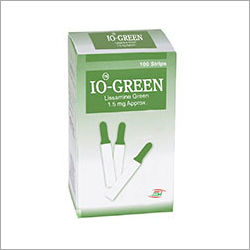
About Lissamine Strip
We are the leading manufactures, exporters and suppliers of our highly offered Lissamine Strip. It basically stains degenerated cells, dead cells, and mucous fibrils. In this the cell nucleus is stained more intensely than cytoplasm. The vacuoles in the mucous thread remain unstained. Our Lissamine Strip( Green ) causes no irritation and can be easily washed out. We offer IO Green to our clients at reasonable prices.
Features:
- Does not stain soft lenses
- Not messy and convenient to use
- Excellent Fluorescein
Effective Staining for Ocular DiagnosisLissamine Strips provide quick, reliable staining of the ocular surface to aid in the detection of compromised or degenerated cells. Their colorimetric technology ensures clear visualization, making them an indispensable tool for assessment of dry eye and related conditions during ophthalmic examinations.
Sterile and Convenient PackagingEach strip is packaged individually in a sterile pouch, preserving its integrity and safety until use. Manufactured using medical-grade cellulose and sterilized by gamma radiation, these diagnostic strips maintain high standards to ensure patient and practitioner confidence.
Simple Application and Practical UseApplication is straightforward, requiring only manual handling. Once removed from the pouch, the strip is briefly moistened with saline and gently applied to the lower conjunctival sac. Results are visible immediately, streamlining the diagnostic process in clinical settings.
FAQs of Lissamine Strip:
Q: How should Lissamine Strips be stored to maintain sterility and efficacy?
A: Store Lissamine Strips in a cool, dry place protected from light. Keeping the strips sealed in their individual sterile pouches until use helps maintain their sterility and extends their shelf life up to 2 years.
Q: What is the primary function of Lissamine Strips in ophthalmic settings?
A: Lissamine Strips are primarily used to detect devitalized or degenerated cells on the ocular surface, making them invaluable for diagnosing dry eye and assessing overall ocular surface health during eye examinations.
Q: When should the Lissamine Strip be used during an eye examination?
A: The strip should be employed when there is a need to evaluate ocular surface health, particularly to identify areas affected by dry eye or to highlight compromised epithelial cells during various ophthalmic assessments.
Q: What is the recommended process for applying a Lissamine Strip?
A: To use the strip, remove it from its sterile pouch, moisten with sterile saline, and gently touch it to the lower conjunctiva. This allows the green dye to stain the devitalized cells, aiding in visual assessment.
Q: Where is this product typically utilized?
A: Lissamine Strips are primarily used in ophthalmology clinics, optometry practices, and hospital eye departments for routine diagnostic procedures involving the ocular surface.
Q: What are the benefits of using Lissamine Green B dye over other ocular dyes?
A: Lissamine Green B offers clear and distinct staining of unhealthy cells without the discomfort sometimes associated with other dyes. This makes it suitable for sensitive patients and for clinicians needing precise diagnostic results.







 Send Inquiry

 Send Inquiry


 Send Inquiry
 Send SMS